

Amateur league standings are at the heart of how local supporters track progress, celebrate success, and plan ahead with Burley FC. As the official community hub, Burley FC brings together players, volunteers, and fans with one reliable place to follow every point and position. This homepage guide explains how we collect, verify, and present data, so every table you see reflects the real story on the pitch. Explore how rankings work, why they matter, and how you can use them to support your club.
How amateur league standings power the Burley community

For grassroots football, amateur league standings are more than numbers on a page. They shape training goals, influence match tactics, and give supporters a simple snapshot of form across the season. On this platform, Burley FC focuses on accuracy and transparency, so every team in our network can trust the information they see. Below, you will find how we structure data, update results, and keep everyone aligned from the first kick-off to the final whistle.
The data sources behind our league tables
To keep standings credible, we combine official league reports, referee match sheets, and verified club submissions. Each result is cross-checked before entering our central database, which powers every table you view. We apply consistent rules for points, goal difference, and head-to-head records, mirroring current FA guidance. This process ensures that local clubs can rely on our figures when planning fixtures, setting objectives, or communicating with their members.
Update frequency and live tracking for members
Match results are usually processed within a few hours of the final whistle, with high-priority fixtures updated first. During peak weekends, our system flags incomplete data and queues it for manual review, reducing the risk of errors. Registered users receive notifications when their team’s position changes, helping coaches and captains react quickly. This live mindset keeps amateur league standings relevant instead of static snapshots that age overnight.
Transparency, rules, and tie‑breaker logic
Clear rules are vital when two sides finish level on points or share identical goal difference. Our tables show the primary tie‑breakers in tooltips, including goals scored, head‑to‑head results, and disciplinary records where the league requires it. We align with the latest 2025–2026 competition regulations, so there is no confusion when places decide promotion or relegation. This clarity protects clubs and volunteers from disputes and helps everyone focus on the football.
amateur league standings tools and dashboards for clubs
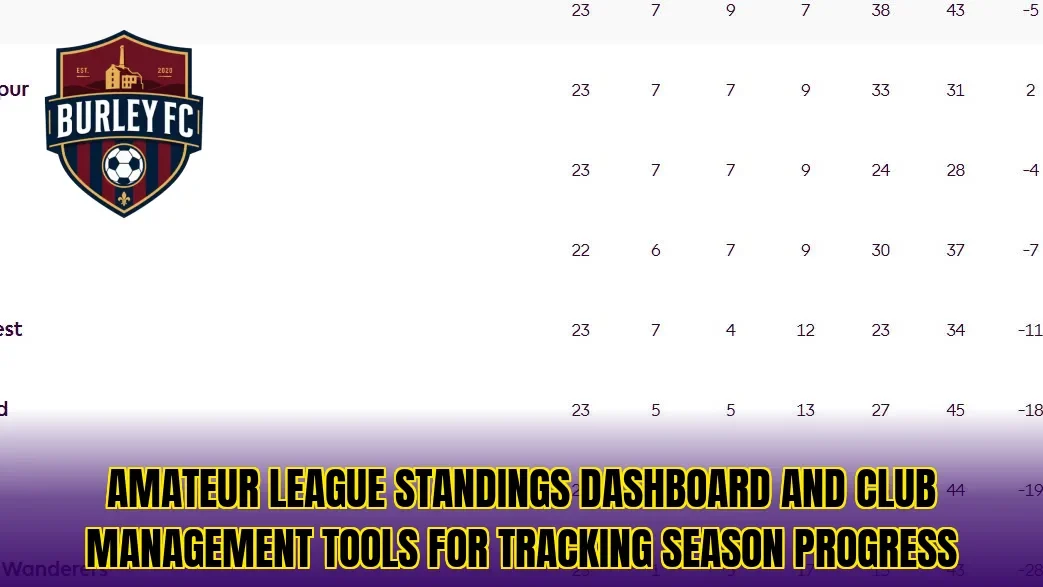
Modern clubs need more than a static list of positions, so our amateur league standings tools provide interactive dashboards for staff and volunteers. Inside the secure area of the Burley FC platform, admins can filter by age group, division, or competition type in seconds. These views support long‑term planning, from youth development to senior squad recruitment. The sections below outline the key features that make our data genuinely useful, not just informative.
Custom views for age groups and divisions
Club officials can switch instantly between junior, women’s, and senior competitions, while keeping a consistent layout. Filters allow you to focus on home form, away form, or the last five matches, depending on your analysis needs. Export options provide clean CSV files for committee reports or presentation slides. With these tools, amateur league standings become a flexible resource that adapts to every meeting and planning session.
Performance analytics built on standings data
Beyond raw ranking, our analytics layer reveals patterns that simple tables might hide. Coaches can compare expected points versus actual results, or track how mid‑season signings affect performance. Rolling averages highlight whether a team is trending upward or struggling to convert chances. This deeper insight allows local clubs to act with the same data‑driven mindset used by professional sides.
Role‑based access for safe data management
Every club can assign different permission levels to committee members, coaches, and team managers. Editors can confirm results and update fixture details, while viewers only read the latest tables and reports. Activity logs track who changed what and when, supporting governance standards and league compliance. This controlled environment keeps Burley FC data secure while remaining easy for volunteers to use.
Reading amateur league standings like a pro analyst

Many supporters glance at amateur league standings and only check position and points. However, a closer look can reveal form, risk, and opportunity for every side in the division. By understanding the key columns and metrics, club leaders can make better choices about tactics, rotation, and player development. The guidance below explains what to watch and how to interpret the numbers throughout the season.
Key metrics that matter in every table
Standard columns such as played, won, drawn, and lost give a quick overview of consistency. Goal difference indicates whether a team controls games or relies on narrow margins. Points per game helps compare divisions with uneven fixture counts due to postponements. When read together, these figures show far more than a simple ranking from top to bottom.
Spotting form trends and momentum shifts
Short‑term form often decides promotion races and relegation battles more than early‑season results. Our tables highlight the last five fixtures, so you can see whether a side is surging or fading. Coaches can adjust training loads or tactical plans when they spot a negative trend. For supporters, this context makes every weekend’s fixtures feel more meaningful and easier to predict.
Using standings to support player development
Youth coordinators can use divisional strength to decide when to move players between squads. A dominant team might test itself by arranging friendlies against higher‑level opposition. Conversely, a struggling side may focus on fundamentals and confidence before chasing the table. By linking development plans to league context, clubs create healthier pathways for every player.
Sample amateur league standings snapshot for Burley fans

To help you understand how we present amateur league standings, the table below shows a simplified example. Real competition tables inside the platform include more filters, detailed form guides, and historical comparisons. This snapshot illustrates the core structure that supporters and staff will see throughout the 2025–2026 campaign.
| Position | Club | Played | Won | Drawn | Lost | Goal Difference | Points | Form (Last 5) |
|---|---|---|---|---|---|---|---|---|
| 1 | Burley Town | 18 | 13 | 3 | 2 | +24 | 42 | W W D W W |
| 2 | Riverside Rovers | 18 | 12 | 2 | 4 | +17 | 38 | L W W D W |
| 3 | Northside United | 18 | 10 | 4 | 4 | +10 | 34 | D W L W D |
| 4 | Parkview Athletic | 18 | 9 | 3 | 6 | +5 | 30 | W L L W D |
How supporters can use the standings snapshot
Fans can quickly see which fixtures will shape the title race or decide play‑off places. When a team like Burley Town holds a strong goal difference, supporters know the side is creating chances and defending well. Form columns highlight when a rival is closing the gap or losing momentum. This context makes every matchday feel part of a bigger narrative across the division.
Benefits for coaches and club committees
Coaches can benchmark their squad against similar clubs and set realistic performance targets. Committees use standings data in season reviews, budget planning, and discussions with local partners. Clear, consistent tables reduce confusion when communicating progress to parents and new players. With reliable information, decision‑makers can plan beyond a single result or week.
Integration with fixtures, results, and training plans
Inside the Burley FC platform, tables link directly to fixture lists, match reports, and training notes. Staff can move from a league position to specific performance details in just a few clicks. This joined‑up approach saves volunteers time and keeps everyone working from the same source of truth. It turns static amateur league standings into an active planning tool for the whole club.
Conclusion
For every player, coach, and supporter, amateur league standings provide the clearest view of where a season is heading. By combining verified data, modern tools, and easy‑to‑read tables, Burley FC makes grassroots football more connected and informed. Visit our platform regularly to follow your team’s journey, analyse performance, and prepare for the next big fixture. With trusted rankings at your fingertips, your club is always ready for the challenges ahead.